Zirconia implants
A zirconia implant replaces the root of a missing tooth, just like a titanium implant. The body of the implant is made of a white, metal-free ceramic and supports a crown. At the Cabinet dentaire du Lys in Juan-les-Pins, we offer zirconia as an alternative to titanium when your situation allows.
What is a zirconia implant?
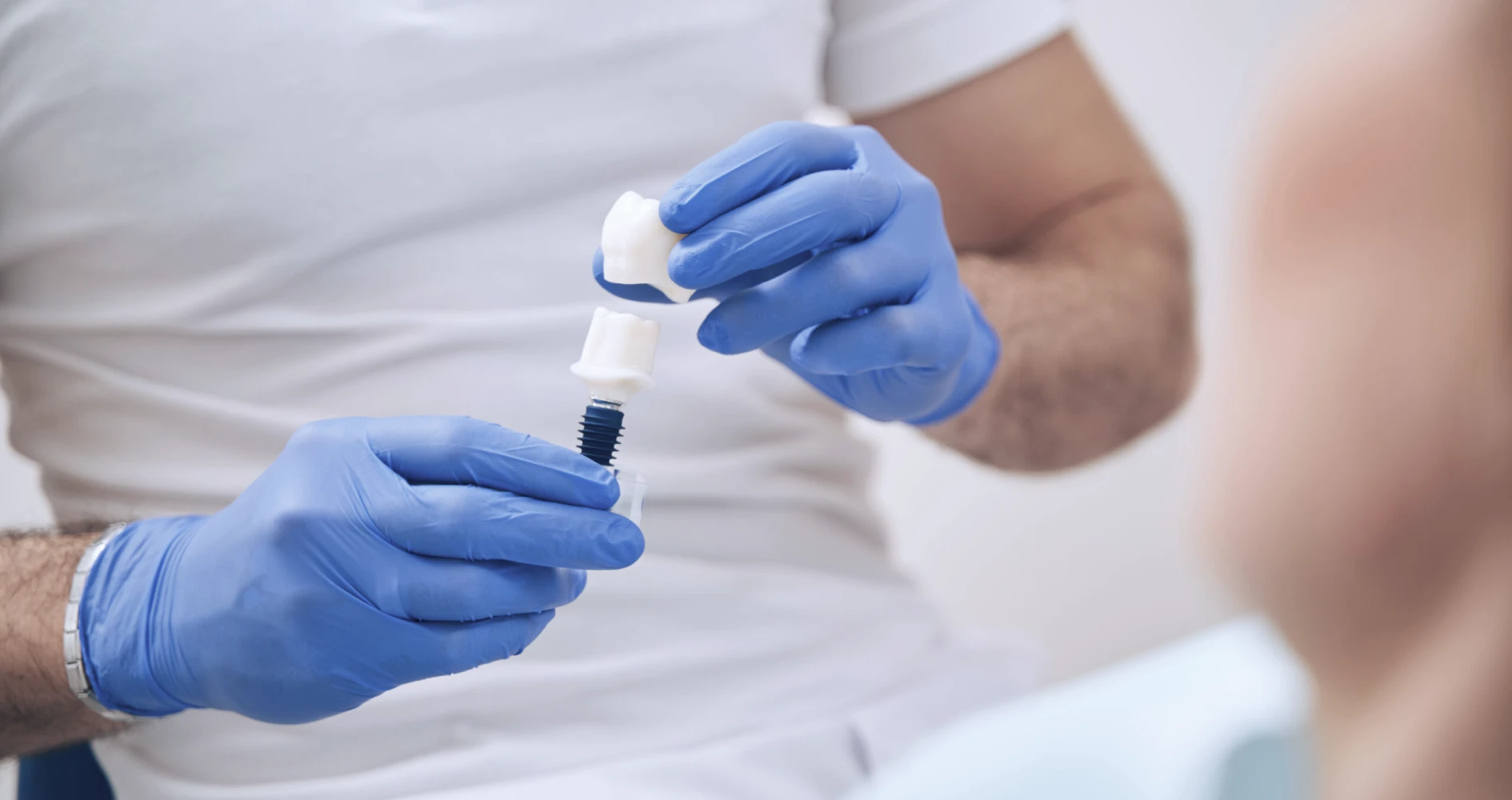
Zirconia, or zirconium dioxide, is a very strong ceramic. It has long been used in dental prosthetics for crowns and abutments. As an implant, it is placed in the jawbone, where the root used to be.
As with titanium, the implant must first bond with the bone: this is called osseointegration. The crown is then fixed onto the implant. Zirconia implants come in one-piece and two-piece designs. The abutment connects the body of the implant to the crown: on one-piece models, it forms a single unit with the implant. The options depend on the system available and on your clinical situation.
Zirconia or titanium: what are the differences?
Both materials can replace a tooth with a fixed solution. They differ mainly in colour, composition and clinical track record.
- ColourZirconia is white. Where the gum is thin, a titanium implant can sometimes show through as a greyish tint. The white shade of zirconia may limit this effect, without prejudging the aesthetic result.
- CompositionThe body of a zirconia implant is ceramic. The composition of the associated components depends on the system chosen.
- GumsStudies describe good integration of the gum tissue around zirconia.
- Clinical track recordTitanium is the most studied material in implant dentistry, with several decades of follow-up. Data on zirconia are favourable, but cover a shorter period.
- Prosthetic optionsTitanium offers more components and configurations. With a one-piece zirconia implant, the position of the implant must be planned very precisely.
Neither material suits every situation. The choice is made with you, after the examination.
When can a zirconia implant be considered?
A zirconia implant may be considered to replace one or more teeth, in particular:
- for a tooth that shows when you smile, especially if your gum is thin;
- if you wish to avoid metal, subject to checking the composition of all the components considered;
- if there is enough bone, or if the bone has been rebuilt beforehand with a bone graft.
In other cases, titanium remains more suitable. Marked teeth grinding or clenching (bruxism), or a prosthesis that requires specific components, may point towards titanium. Your general health, smoking and oral hygiene are also assessed, whatever the material.
How is a zirconia implant placed?
1. Assessment
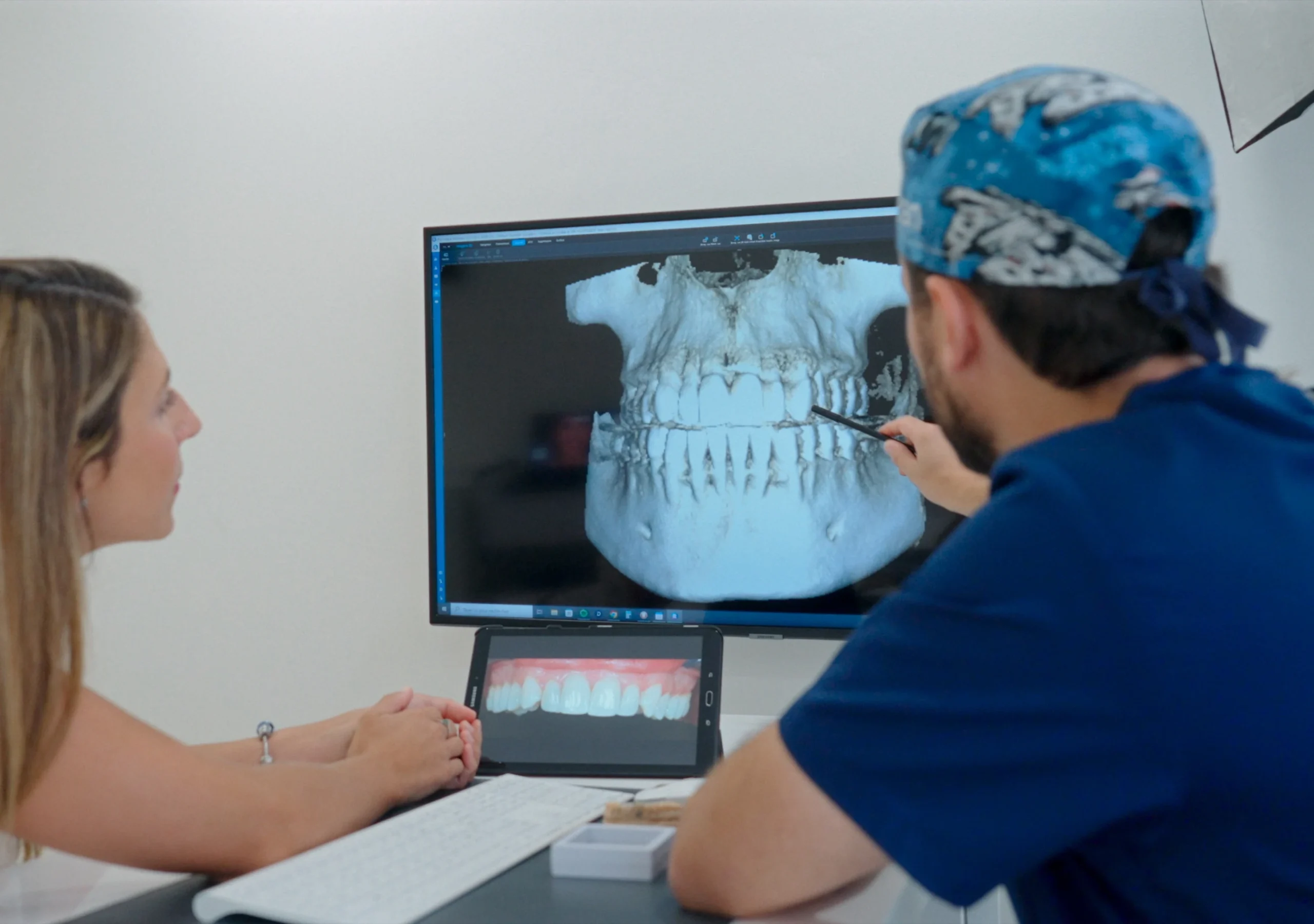
The dentist examines your mouth. Depending on your needs, a 3D X-ray can help assess the bone volume. The dentist then explains the possible options and their limits in your case.
2. Surgery
The implant is placed under local anaesthetic. Depending on the situation, a temporary tooth can be fitted during healing.
3. Healing
Osseointegration takes time. How long depends on the quality of the bone and the area treated: this is specified in your treatment plan.
4. Final crown
Once the implant has bonded with the bone, the final crown is custom-made and fixed onto the implant.
Aftercare and follow-up
After surgery, you receive instructions adapted to your procedure. Like a natural tooth, an implant needs careful brushing and cleaning between the teeth. Interdental brushes help you clean around the crown.
Regular check-ups at the practice help monitor the gum and bone around the implant. Inflammation can affect a zirconia implant just as it can a titanium one.
Your care at our practice

Your project starts with a consultation, where we take the time to listen to your request. The clinical and X-ray examination then assesses whether an implant can be placed. It also helps determine the right material for your situation. The dentist presents the treatment plan and gives you a detailed quote before any decision. The practice has a dedicated surgical suite. Follow-up appointments are then scheduled to monitor healing.
Frequently asked questions about zirconia implants
Zirconia is a very strong ceramic, suited to chewing. However, it withstands certain stresses less well, particularly bending forces. In some situations, especially when mechanical stresses are high, titanium may be preferred after examination. The examination helps choose the right material for your mouth.
The body of the implant is ceramic. On some two-piece implants, the screw that connects the implant to the abutment may be metal. If a completely metal-free solution matters to you, mention it at your consultation. The dentist can tell you the composition of the components that could be used in your situation.
A well-integrated titanium implant does not usually need to be removed just to change material. The question of material mainly arises when planning a new implant. If you have discomfort or doubts, an examination can assess the situation.
The lifespan of an implant varies from person to person, whatever the material. It depends on hygiene, follow-up, smoking and the forces placed on the prosthesis. The clinical track record for zirconia is also shorter than for titanium.
The body of the implant sits in the bone. Once treatment is complete, the crown is what you see. Under a thin gum, the white shade of zirconia may limit the appearance of a grey tint.
Book an appointment for a zirconia implant in Juan-les-Pins
Are you weighing up zirconia and titanium, or wondering whether an implant is possible in your case? We can discuss it at a consultation at the Cabinet dentaire du Lys in Juan-les-Pins. Book an appointment online or by phone.
You may also be interested in