Ceramic crowns
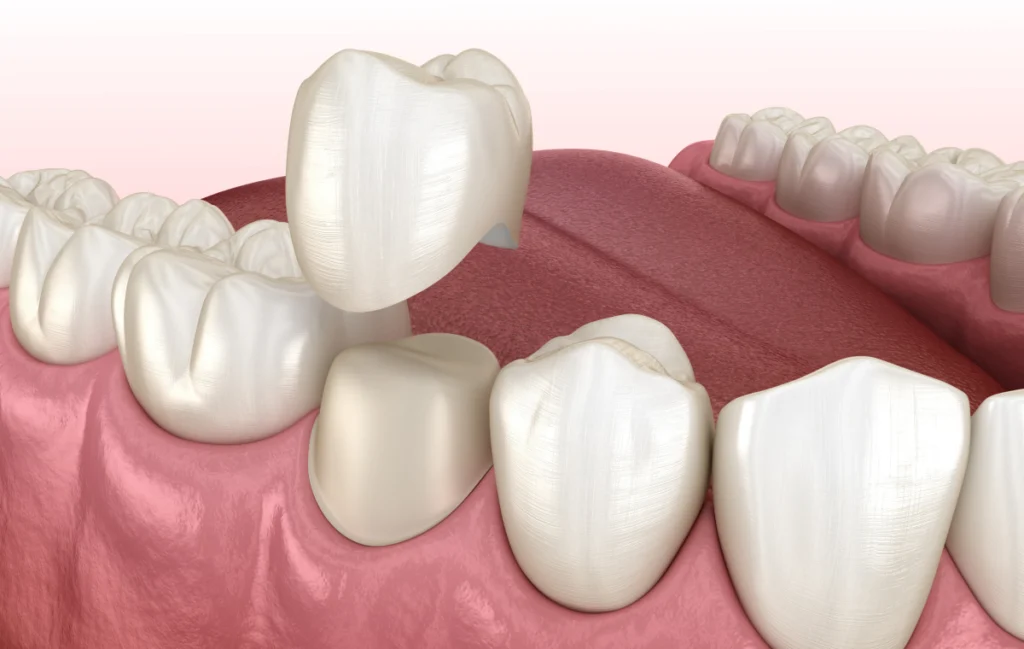
A ceramic crown is a fixed prosthesis that covers a weakened tooth to restore its shape, strength and appearance. It acts as a kind of “cap” that encloses the natural tooth, protecting it from fractures and external damage. Unlike some other types of crown, an all-ceramic crown contains no metal. This makes it particularly natural-looking, as its colour can be closely matched to the neighbouring teeth, so it blends harmoniously into the smile.
Ceramic crowns are generally used to restore teeth damaged by decay or fractures, or to cover a root-canal-treated tooth. They can also be part of some treatment plans concerning the appearance of the smile. Fitting a crown involves precise steps, combining restorative and prosthetic care.
When should a ceramic crown be considered?
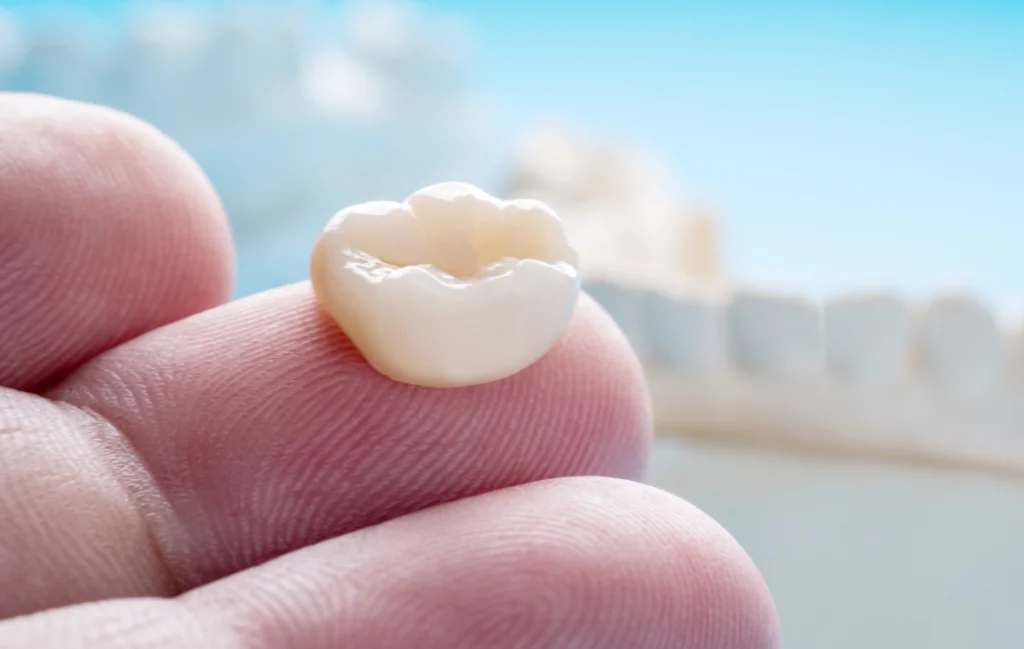
Several situations may lead a dentist to suggest a ceramic crown. When a tooth is badly decayed and a simple filling can no longer make it strong enough, a crown is a long-lasting solution. It is also indicated for fractured teeth that could break further despite a conventional restoration.
A root-canal-treated tooth is also more fragile than a living tooth. In this case, a ceramic crown protects the remaining structure and limits the risk of cracking.
Finally, some patients wish to improve the appearance of their smile: a crown can then conceal a stained or misshapen tooth when other options, such as veneers, are not suitable.
Steps in fitting a ceramic crown
Preparing the tooth
First, the tooth is prepared. The dentist slightly reduces its volume to create the space needed for the crown. This step is carried out under local anaesthetic for the patient’s comfort.
Impressions and making the crown
Dental impressions are then taken, either traditionally with specific materials or with an intraoral scanner. The dental technician uses this data to make a crown that fits the patient’s mouth precisely.
Fitting a temporary crown
While the crown is being made, a temporary crown is fitted. It protects the prepared tooth and keeps your smile looking presentable until the final crown is ready.
Fitting the final crown
Once the ceramic crown is ready, it is tried in, adjusted and then cemented in place. The dentist checks that it fits the tooth properly and that the bite is balanced.
The materials used
Ceramic crowns can be made from different types of ceramic. Feldspathic ceramic is known for its very natural appearance and translucency close to that of natural enamel.
Lithium disilicate offers high strength, suited to teeth subject to greater chewing forces. Zirconia stands out for its strength while still giving a satisfactory appearance.
The choice of material depends on the tooth concerned, its position and the patient’s expectations. For a visible incisor, colour and translucency take priority; for a molar, which bears more load, strength comes first.
Lifespan and care
A ceramic crown can last for many years if well cared for. The average lifespan is between 10 and 15 years, and some last even longer. Longevity depends on the material, the quality of the cementation and oral hygiene.
It is advisable to keep up a careful brushing routine twice a day and to use additional aids such as dental floss or interdental brushes. Regular visits to the dentist make it possible to check the crown and detect any problems early.
Appearance and how the crown blends into the smile
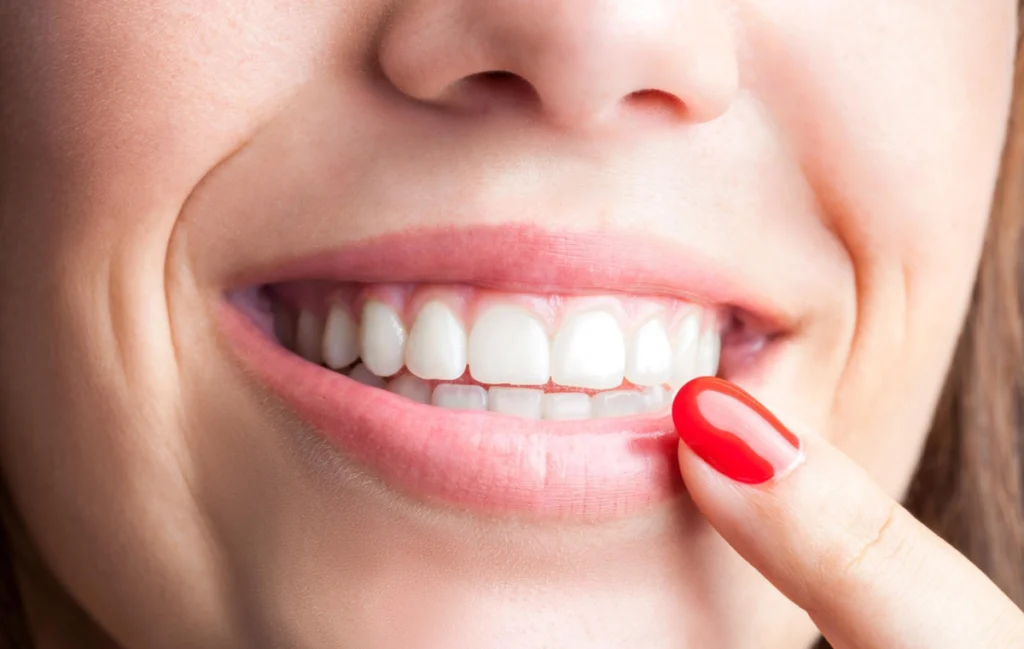
One of the main advantages of ceramic crowns is their ability to blend naturally into the smile. Unlike porcelain-fused-to-metal crowns, there is no grey line that can appear at the gum line. Light passes through the material in a similar way to enamel, giving the restored tooth a natural look.
This is particularly important for the front teeth, which play a central role in the harmony of the smile. Because the shade is customised, the nuances specific to each patient can be reproduced.
Ceramic crowns and everyday comfort
Once fitted, the crown behaves like a natural tooth. Patients can chew comfortably and generally notice little difference. Adjustment is usually quick: a few days are enough for the crown to feel fully integrated.
Some precautions are needed, however. It is best to avoid biting into very hard foods that could weaken the ceramic. If you grind your teeth at night (bruxism), a protective night guard may be recommended.
The role of temporary crowns
Temporary crowns should not be overlooked. Although they are temporary, they protect the prepared tooth from sensitivity and temperature changes. They also preserve the space between teeth, preventing unwanted movement, and allow you to smile with confidence during the transition phase.
Frequently asked questions (FAQ)
- Is having a ceramic crown fitted painful?
Preparation and fitting are carried out under local anaesthetic, so you should not feel pain during the procedure. Slight sensitivity may occur afterwards, but it usually fades quickly.
- How long does it take to fit a ceramic crown?
Two appointments are usually needed: one to prepare the tooth and take impressions, and another to fit the final crown. In between, the patient wears a temporary crown.
- Can a ceramic crown break?
Like a natural tooth, it can be weakened by knocks or habits such as bruxism. However, modern materials are highly resistant.
- How do I clean a ceramic crown?
Clean it as you would your natural teeth, with regular brushing and interdental cleaning. Daily hygiene is essential to help it last.
- Can a ceramic crown be replaced?
Yes. If it shows wear or if the tooth underneath needs further treatment, it can be removed and replaced.
Book an appointment for suitable follow-up
If you think a crown might be needed to restore a tooth, it is important to see a dentist for an accurate diagnosis and a personalised treatment plan. Every situation is different, and only a clinical examination can determine the most suitable solution. You can book an appointment online with Dr Lisa Baure and Dr Jean-Michel Heurtebise at the Cabinet dentaire du Lys in Juan-les-Pins for care adapted to your needs.
You may also be interested in: