Prosthetic restoration
Prosthetic restoration covers the dental treatments that rebuild or replace damaged or missing teeth. It includes several techniques that restore chewing function, appearance and balance to the teeth.

This type of treatment is for people who have lost a tooth through deep decay, injury, extraction or gum disease. It is also for patients whose teeth have become weaker with age or wear.
By restoring the harmony of the smile and everyday comfort, prosthetic restoration contributes directly to oral health. It is not only about appearance: it also helps balance the bite, supports efficient digestion and helps keep the gums and jawbone stable.
The key principles of prosthetic restoration
Preserving chewing function
Chewing plays an essential role in digestion, and this becomes more difficult when one or more teeth are missing. Prosthetic restoration re-establishes a balanced bite so that chewing forces are distributed correctly. This even distribution relieves the remaining teeth and limits premature wear.
Restoring the appearance of the smile
The way your smile looks can strongly influence self-confidence. A missing or damaged tooth can make people self-conscious or uncomfortable in social situations. Today’s prosthetic solutions blend naturally with the existing teeth, respecting their colour, shape and alignment, for a harmonious, natural-looking smile.
Maintaining oral health
Replacing a missing tooth or strengthening a weakened one protects the balance of the whole mouth. A restoration prevents teeth from shifting, avoids overloading certain areas and limits jaw joint problems, improving long-term stability.
The different types of prosthetic restoration
- Bridges
A bridge replaces one or more missing teeth. It is supported by the neighbouring teeth, which are prepared to receive crowns. These teeth act as abutments, while the artificial tooth fills the gap. Because it is fixed, a bridge restores both function and appearance.
- Removable dentures
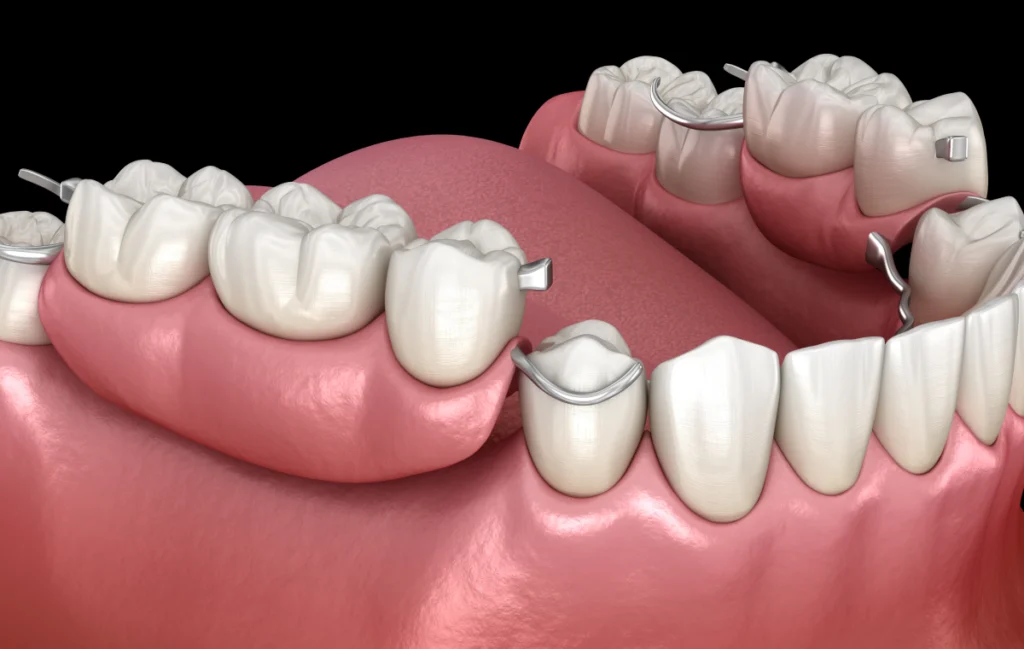
Removable dentures, partial or complete, replace several teeth or a whole arch. The patient can take them out for cleaning. They rest on the gums or on certain teeth.
- Dental crowns
A crown covers a damaged tooth to protect and strengthen it. It is custom-made from traditional or digital impressions, in materials such as ceramic, porcelain-fused-to-metal or zirconia. This type of restoration is used when a tooth has lost much of its structure but the root is still strong enough to support it.
- Implant-supported restorations
An implant placed in the bone acts as an artificial root. It supports a crown, a bridge or a complete denture. This technique offers stability close to that of natural teeth and helps preserve the jawbone by stimulating it as a tooth would.
How prosthetic treatment works
Diagnosis and treatment plan
Treatment always begins with a clinical and X-ray examination. The dentist assesses the teeth, gums and bone, then draws up a personalised treatment plan that takes into account the patient’s general health and expectations.
Preparing the mouth
Before fitting a prosthesis, the dentist prepares the mouth. This may include treating decay, scaling or other restorative care, so that the foundation is healthy and the restoration can succeed.
Making the prosthesis
After preparation, the dentist takes impressions, either conventional or digital. The laboratory then makes the custom prosthesis. In the meantime, a temporary restoration keeps the patient comfortable and maintains their appearance.
Fitting and adjustment
When the final prosthesis is ready, the dentist fits it and checks how it sits, how the teeth bite together and how it integrates with the natural teeth. Follow-up appointments help ensure long-term comfort and stability.
Materials used in prosthetic restoration
Materials play a decisive role in the quality of treatment.
- Ceramic gives an appearance close to natural enamel.
- Porcelain-fused-to-metal combines strength with a harmonious appearance.
- Zirconia offers strength and biocompatibility.
The choice depends on several factors: the position of the tooth, the function required and the patient’s preferences.
Caring for prosthetic restorations
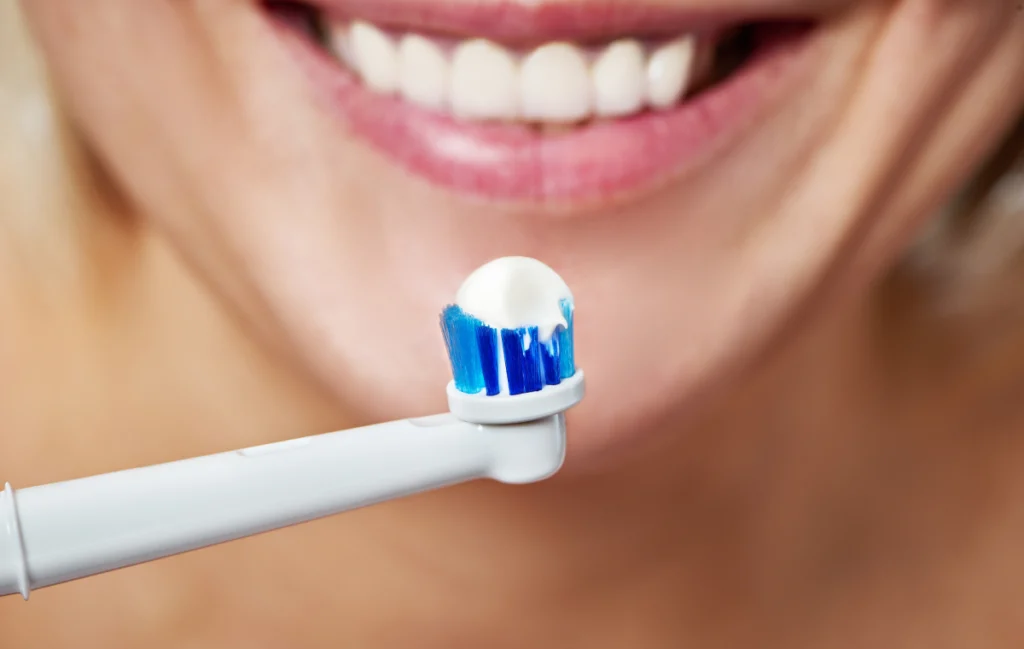
Careful maintenance extends the life of a restoration.
- Brush your teeth twice a day with a suitable toothbrush.
- Use dental floss or interdental brushes to clean hard-to-reach areas.
- Schedule regular visits to check your prostheses.
These simple habits help keep your teeth healthy and your restorations in good condition.
How prosthetic restoration affects everyday life
Dental restoration has a direct impact on quality of life. It allows you to eat comfortably, speak easily and smile with confidence again. The time needed to adjust varies with the type of prosthesis, but most patients quickly find a satisfactory level of comfort.
Prosthetic restoration FAQ
- Is prosthetic restoration painful?
Most procedures are carried out under local anaesthetic, which limits discomfort. After fitting, slight sensitivity may occur, but it generally disappears within a few days.
- How long does a prosthesis last?
Longevity depends on the type of prosthesis, the material used and how well it is looked after. A well-maintained crown or bridge can last more than ten years, and implants often offer even longer-lasting stability.
- Can I eat normally with a prosthesis?
Yes, the aim of restoration is precisely to restore full chewing function. A period of adjustment may be needed, especially with a removable denture, but normal eating habits gradually return.
- Is restoration covered by health insurance?
Part of the treatment may be covered by the French national health insurance and top-up insurance, depending on the type of prosthesis and the patient’s situation. A detailed estimate is always provided before treatment begins.
Book an appointment
If you would like to know more about prosthetic restoration or receive personalised support, you can book an appointment online with Dr Lisa Baure and Dr Jean-Michel Heurtebise at the Cabinet dentaire du Lys in Juan-les-Pins.
You may also be interested in: