Guided implant surgery
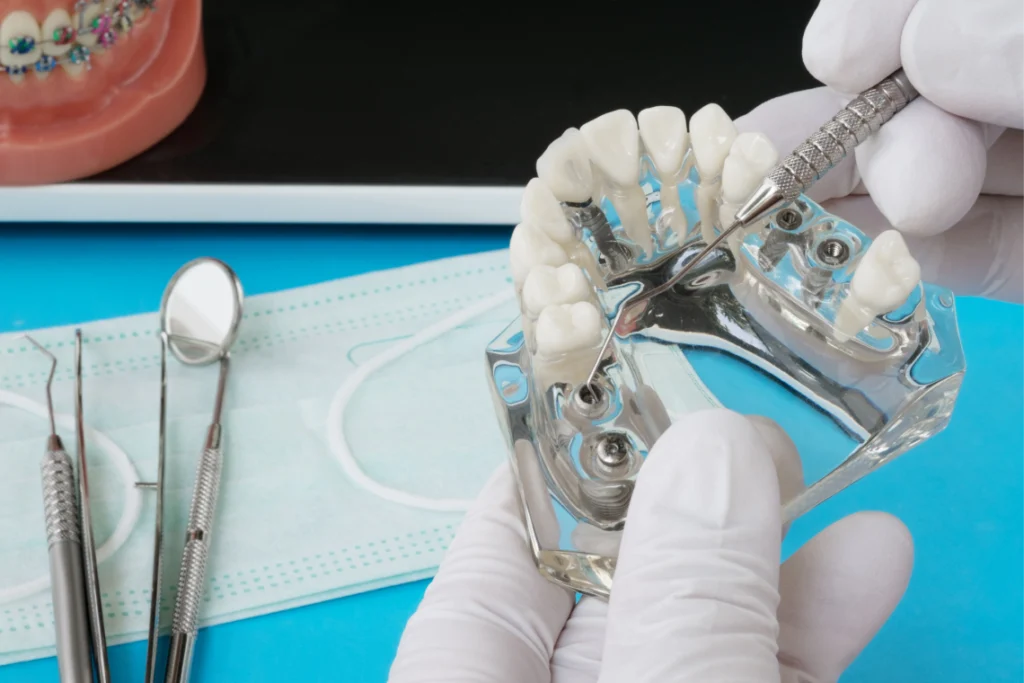
Guided surgery is a modern technique used in dental implant treatment. It relies on digital planning of the surgical procedure so that a dental implant can be placed with millimetre precision. Before the procedure, the dentist uses dedicated software to simulate the position of the implant virtually, based on three-dimensional images from a CT or cone beam scan.
Thanks to this careful preparation, the dentist can visualise the patient’s jaw and decide in advance on the best position for the implant, taking into account bone density, the gums and the future crown or bridge. Once planning is complete, a surgical guide is made to direct the instruments during the procedure.
Guided surgery improves the precision of the procedure and helps limit incisions. As a result, healing tends to be quicker and recovery more comfortable for the patient.
How does guided surgery work?
The protocol follows several clearly defined steps, each of which plays an essential role in the treatment.
1. The pre-operative assessment
The dentist begins with a full clinical examination to assess the patient’s oral health, then takes a 3D scan to obtain a detailed view of the jaw and nearby anatomical structures. These images are imported into planning software, which is used to position the future implants virtually.
2. Designing the surgical guide
Once the plan has been approved, a custom surgical guide is designed. It fits the patient’s jaw precisely and has openings corresponding to the exact positions of the implants. During the procedure, the guide directs the drills so that the plan can be followed accurately.
3. The procedure
On the day of the procedure, the dentist fits the guide and places the implants according to the plan. This digital preparation shortens the operating time and reduces the incisions needed, so the gum is less traumatised and recovery is quicker. In some cases, the surgery can even be performed without opening the gum (the so-called flapless technique).
4. Fitting the crown or bridge
Depending on the stability of the implant, a temporary crown or bridge may be fitted on the same day. Otherwise, it is fitted after the healing phase. Thanks to digital planning, the new teeth are integrated into the dental arch precisely and harmoniously.
The clinical benefits of guided surgery
Guided surgery offers several medical and practical benefits for both the dentist and the patient.
- Greater precision
Virtual planning and the surgical guide help position the implants accurately while respecting sensitive anatomical structures (nerves, sinuses). This reduces the risk of complications during surgery.
- A less invasive procedure
Because incisions are smaller, post-operative pain is often reduced. Recovery is simpler, with limited swelling.
- Safety and predictability
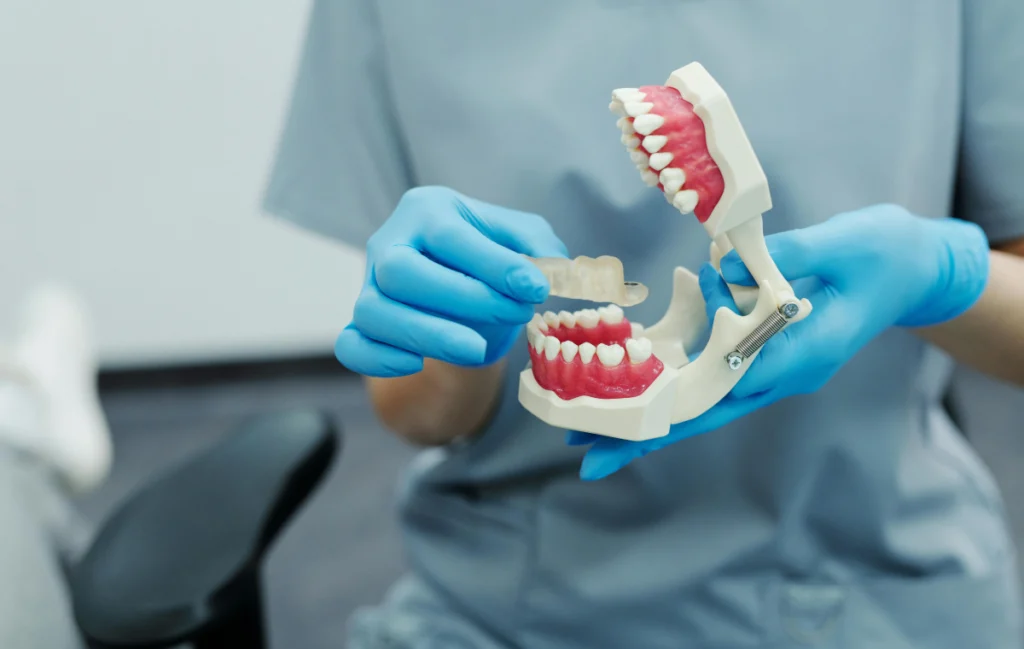
Each step is planned in advance, from the position of the implant to the future crown or bridge. The dentist has a clearer view of the intended result, which improves coordination between the surgical and prosthetic phases.
- Suited to complex situations
This technique is a reliable option when bone density is low or when implant treatment is planned for several teeth.
When is guided surgery used?
This method is not used for every patient, but it has real advantages in several situations:
- placing several implants in the same arch;
- restoring a full jaw;
- limited bone density requiring precise planning;
- wishing to reduce operating time and post-operative discomfort.
The dentist assesses whether this approach is appropriate based on bone quality, general health and the patient’s expectations.
Guided surgery and digital imaging
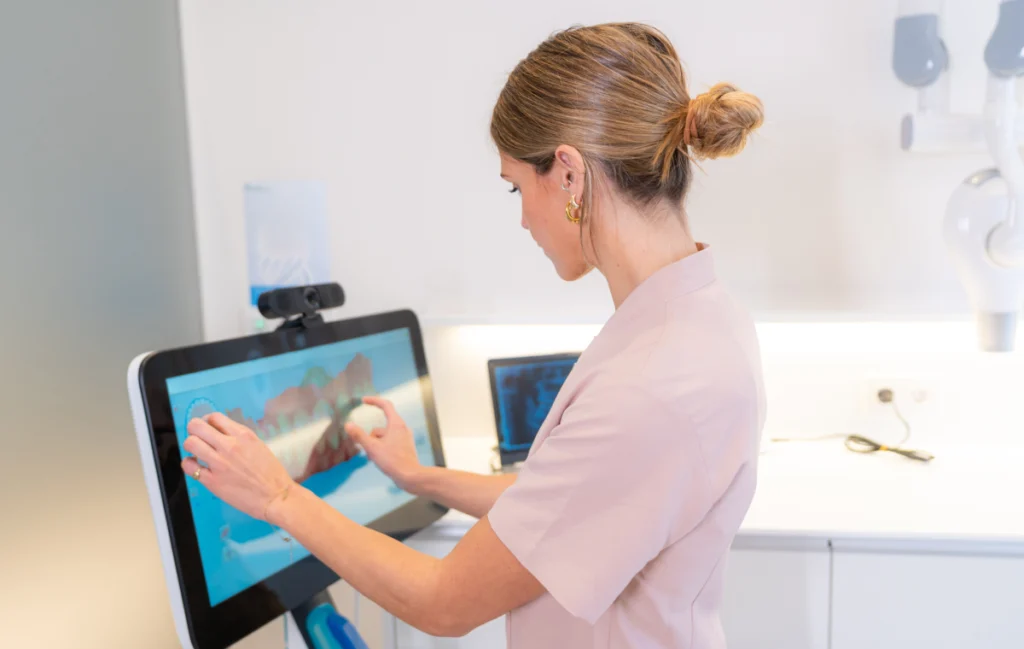
Three-dimensional imaging is one of the foundations of guided surgery. A cone beam scan produces a volumetric image of the jaw, giving a complete view of the bone and teeth. This data is then combined with digital impressions taken with an intraoral camera to create a highly accurate digital model.
Combining imaging and planning makes it possible to determine the exact position, angle and depth of the implant in advance, which plays a key role in implant treatment.
Healing after guided surgery
Once the implant has been placed, the bone needs time to consolidate around it: this is osseointegration. It generally takes two to four months. During this time, the patient may wear a temporary crown or bridge to preserve appearance and chewing.
Careful oral hygiene supports healing. Patients should follow the practice’s advice: gentle brushing, a suitable diet and thorough cleaning around the treated area. Regular check-ups allow the dentist to monitor the stability of the implant and the health of the surrounding tissues.
Long-term follow-up and maintenance
Post-operative follow-up remains essential for the treatment to last. At each visit, the dentist checks that the implants are well integrated and that the gums are healthy, and adjusts the crown or bridge for comfort if necessary.
In the long term, careful oral hygiene protects the implants. Regular scaling and the use of interdental brushes help prevent inflammation. Daily care helps keep the result stable and the gums healthy.
Frequently asked questions (FAQ)
Is guided surgery painful?
The procedure is carried out under local anaesthetic. Recovery is usually not very painful, thanks to the precision of the procedure and smaller incisions.
How long does the procedure take?
Operating time depends on the number of implants, but prior planning allows a quicker, well-controlled procedure.
Is guided surgery suitable for everyone?
It suits most patients, but a clinical and X-ray assessment is needed to confirm that it is appropriate.
Can a crown be fitted immediately after the implant?
Yes, in some selected cases, when the implant is stable enough, a temporary crown or bridge can be fitted straight away.
Is there any specific follow-up after surgery?
Yes. Check-up appointments are scheduled to make sure the implant is integrating well and the surrounding tissues are healthy.
Book an appointment
Guided surgery is a modern, precise approach to placing dental implants, designed with comfort and reliability in mind throughout treatment. Each treatment plan is tailored to the clinical and aesthetic needs of the patient.
To find out more about this method and discuss suitable treatment, you can book an appointment with the Cabinet dentaire du Lys in Juan-les-Pins, online or by phone.
You may also be interested in: